Soda Dungeon 2
- 4.6
- Rating
- 1.00M
- Installs
- Free
- Price

 Analysis by App-foxy
I spent time with Soda Dungeon 2 as a free adventure game from Armor Games Studios Inc, and my first impression was easy to understand: it is built for players who enjoy watching a plan develop over repeated dungeon runs rather than controlling every second of a fast action battle. The setup is deliberately relaxed, but the decisions underneath it can become surprisingly absorbing. You recruit a team, send it into danger, improve what works, and return with a clearer idea of how to prepare for the next attempt.
That rhythm makes it a good fit for short sessions. I can check a run, adjust a few choices, and leave without feeling that I abandoned a complicated story at the wrong moment. At the same time, it has enough long-term progression to reward players who like turning small improvements into a more reliable routine. The important question is whether you enjoy that kind of gradual optimization. If you want constant manual combat or a tightly directed adventure, this may feel too hands-off.
How the dungeon loop feels in everyday play
The strongest part of the game is the way it turns repetition into a decision-making exercise. A dungeon run is not only about reaching the next room. It is also a test of preparation: which characters should go, how much risk is sensible, and whether the reward is worth continuing when the team is already under pressure. I found myself thinking less like an action player and more like someone managing a small expedition.
You May Also Like

 Blood Strike: 2.5 Anniversary
Blood Strike’s Loadouts Turn Every Drop Into a Tactical Gamble
A close look at Blood Strike’s custom loadouts: how fast access to signature weapons reshapes its battle royale rhythm, rewards preparation, and narrows the gap between fights.

 Pandora - Music & Podcasts
Pandora’s Music Is Easy to Start, but Harder to Recover
Pandora’s strength is its low-effort path from a seed to a station. Its weak spot is how much confidence it asks you to place in connection, setup, and quiet recovery.

 8 Ball Pool
 Is Built on Rivalries, Rematches, and Routine
A close look at the rivalries, rematches, shared routines, and unanswered safety questions that turn a quick pool match into a persistent mobile community.

 Samsung Music
’s Quiet Strength Is Playing What You Already Own
Its reach comes less from spectacle than from dependable access to a personal library. That simplicity is both the app’s strongest retention engine and its ceiling.

 AccuWeather: Weather Radar
AccuWeather Review: A Quick, Clear Forecast for Everyday Decisions
For everyday plans, the best forecast is the one you can understand quickly. AccuWeather makes rain timing, radar, and local conditions easy to act on, with a few trade-offs.

 Hill Climb Racing
Why Hill Climb Racing Still Turns Crashes Into One More Run
A tiny car, a bumpy hill and one more upgrade: Hill Climb Racing keeps resurfacing because its simple chaos makes every near-miss feel personal.
More From Our News Desk



That distinction matters because the game’s laid-back identity is not the same as being effortless. The presentation encourages you to relax, but progress still depends on recognizing patterns and making sensible upgrades. A weak setup can make a run feel wasteful, while a well-prepared group can turn the same kind of challenge into a steady source of progress. The pleasure comes from learning that difference.
A realistic use case is a short break during the day. I might start a run while waiting for an appointment, check the outcome later, and spend the rewards on a better plan before beginning again. It works particularly well when I want something more meaningful than a one-minute distraction but do not have the uninterrupted time required by a large role-playing game. The game lets me return to a familiar routine instead of forcing me to remember a complex plot every time.
There is also a useful separation between immediate results and long-term improvement. A failed or disappointing run can still teach me something about preparation. That makes setbacks easier to accept than in a game where losing simply means repeating the same action. I began to treat each attempt as information: perhaps the party needed a different balance, perhaps I pushed too far, or perhaps the reward did not justify the risk.
Progress works best when you resist automatic decisions
My main practical tip is not to spend every reward as soon as it appears. Keeping a little flexibility makes it easier to respond when a new obstacle exposes a weakness in your current approach. Early improvements can feel satisfying, but a collection of small, unfocused upgrades is not always as useful as saving toward a change that solves a specific problem.
I also recommend paying attention to the difference between a run that is merely possible and one that is efficient. Surviving by a narrow margin may look like success, yet it can leave you poorly positioned for the next challenge. When I began judging runs by consistency rather than by the furthest point reached, my progress became less erratic. That is one of the game’s less obvious lessons: reliability often matters more than a single impressive attempt.
Another helpful habit is to change one important part of a setup at a time. If I alter everything after a bad result, I cannot tell which decision made the difference. Small experiments make the progression easier to understand and reduce the feeling that success depends on guessing. Players who enjoy testing combinations will get more from the system than players who prefer one obvious best path.
The trade-off is that this methodical pace can become repetitive. The game asks you to accept a loop of preparation, attempt, reward, and adjustment. If that loop is satisfying, it can carry the experience for a long time. If you need frequent new mechanics or dramatic changes in scenery to stay interested, the same structure may begin to feel like routine work.
What the free entry point really means
The game is free to download and play, which makes it easy to try without committing money first. It also includes in-app purchases ranging from $0.99 to $49.99 per item. I would therefore approach the store screen with a clear personal rule: decide in advance whether you are willing to spend, and do not let a moment of impatience make that decision for you.
That purchase range is important context for anyone evaluating fairness. The game’s free availability lowers the barrier to entry, but optional spending can still affect how a player experiences progress. I would not describe the presence of purchases alone as proof that the game is unfair. What I can say is that players who want a completely purchase-free environment should treat the free route as the main test and avoid assuming that every convenience will be available without spending.
My preferred approach is to play long enough to understand the normal progression before considering any purchase. That gives me a better sense of whether I am paying to support a game I already enjoy or simply trying to remove friction that I have not yet learned to manage. It also protects the central satisfaction of the game, which comes from improving a plan rather than immediately bypassing every obstacle.
For families, the Teen content rating is worth taking seriously. It does not automatically make the game unsuitable for every younger player, but it is a reminder that parents should make their own decision instead of treating the free label as a complete description of the experience. The same applies to spending: device-level purchase controls are sensible whenever more than one person uses the device.
Does spending decide who progresses?
I am cautious about making strong claims here. The game has a free price and paid items, but those facts alone do not establish how much a paying player can accelerate progress or whether every important path remains equally practical without spending. I would not invent a promise of perfect balance, and I would not accuse the game of forcing purchases without direct evidence.
From a player’s point of view, the fairest way to judge it is to ask whether the free loop remains enjoyable when progress slows. If the answer is yes, the purchases are easier to treat as optional conveniences. If the answer is no, then even a technically free game may feel pressuring. My own advice is to focus on whether each session gives you a useful decision, not whether you are advancing as quickly as someone who pays.
This is also where the game differs from competitive alternatives. Soda Dungeon 2 is primarily a personal progression experience, so I am not measuring my build directly against another person’s paid advantage in a live match. That removes one common source of frustration. A player can still dislike spending pressure, but the emotional impact is different when the challenge is mainly about improving your own expedition rather than losing a ranked contest.
That does not make the question irrelevant. A player who enjoys optimizing under equal conditions may prefer a premium adventure game with one upfront cost and no purchase choices. Someone who likes a free trial and accepts optional monetization may find this model more comfortable. The better option depends on whether convenience purchases feel like a harmless choice or an interruption to the progression you came to enjoy.
Where it sits beside other adventure games
Compared with a conventional action dungeon crawler, this game gives up direct control in exchange for planning and repeatability. I do not get the same physical satisfaction as dodging attacks myself or timing every strike. Instead, I get a quieter form of involvement: building a team, spotting weaknesses, and deciding when a run is ready to continue.
Compared with a story-heavy adventure, it is less about memorable scenes and more about the structure of the journey. I would choose a narrative game when I want characters, dialogue, and a carefully paced conclusion. I would choose this one when I want a system I can revisit in small pieces, especially when my attention is divided.
It also differs from competitive mobile games because the core appeal is not proving that I can outspend or outreact another player. That makes it a calmer recommendation for someone who dislikes leaderboards and real-time pressure. On the other hand, players who need social competition, direct rivalry, or constantly changing opponents may find the experience too self-contained.
The most useful comparison is with other idle-leaning dungeon games. Soda Dungeon 2 stands out for making preparation feel like the main activity rather than a brief pause between battles. That is its strength and its limitation. If you enjoy seeing a strategy mature over many attempts, the design has a clear purpose. If you expect every fight to demand your hands-on attention, the same design can feel passive.
Small decisions that improve the experience
I found three habits especially valuable. First, I avoid treating the deepest available challenge as automatically the best use of time. A safer route that produces dependable rewards can be more useful than repeated failures at the edge of my current ability. This is a simple change, but it prevents the common mistake of confusing difficulty with efficiency.
Second, I use short sessions intentionally. Instead of leaving the game open and letting repetition blur together, I set a small goal such as testing one team adjustment or saving toward one improvement. That gives each visit a purpose and makes the loop feel less like background noise. It is a better fit for the game than trying to force a long, uninterrupted marathon.
Third, I separate curiosity from necessity. Sometimes I try an unusual setup simply to see what happens; other times I use the most dependable approach available. Mixing those two moods keeps the game from becoming either rigid optimization or random experimentation. The unusual attempt is more enjoyable when I already have a stable plan to return to.
These habits also reveal who should skip the game. I would not recommend it to someone who dislikes repeating content, wants a fully manual combat system, or feels uncomfortable with any free-to-play purchase structure. I would also hesitate to suggest it to a player looking for a short adventure with a clear ending. Its appeal is ongoing improvement, not a compact campaign that wraps up neatly.
Device expectations and practical details
The Android release supports devices running Android 6.0 or later. That makes it accessible to a broad range of Android users, although compatibility on paper does not guarantee identical performance on every device. I would still keep the usual practical expectations for a game with repeated runs: make sure the device has enough free space and avoid judging the experience from a single brief launch.
The current version is 1.2.21, and the game originally arrived on June 25, 2020. Those details help place it as an established release rather than a brand-new experiment. I like that distinction because players can approach it with more realistic expectations: the design has had time to define its own identity, and it is not trying to imitate every current mobile trend.
Its audience is substantial, with over one million installs, while the average rating is 4.6 from around thirty-four thousand ratings. There are also around two thousand written reviews. I do not treat popularity as proof that I will personally enjoy the loop, but those figures do suggest that the relaxed dungeon format has found a sizeable audience.
The developer, Armor Games Studios Inc, is closely associated with the title in the store presentation, and the game’s identity is clear from the first session. It is not pretending to be a cinematic console adventure. That honesty helps: I can decide quickly whether its incremental, management-focused rhythm matches what I want from an adventure game.
My trust verdict after weighing the trade-offs
My overall view is positive, with an important condition: I recommend it as a planning game first and a dungeon action game second. The free entry point makes trying it straightforward, the short-session structure suits everyday play, and the progression gives thoughtful players room to experiment. I especially like the way a failed run can become useful feedback instead of pure wasted time.
I am less enthusiastic about the possibility of spending pressure because the game includes individual purchases from $0.99 to $49.99. That does not tell me that the experience is unfair, but it does mean I would keep my expectations disciplined. I would play the free route first, decide whether the normal pace feels rewarding, and only spend if the purchase fits a decision I have already made calmly.
For me, the best audience is someone who enjoys relaxed dungeon progression, repeatable runs, and the satisfaction of turning a rough strategy into a dependable one. It is particularly suitable for players who want an adventure game they can visit in short bursts without losing their place. The wrong audience is someone seeking constant action, a strong narrative, or a fully fixed-price experience with no optional purchase layer.
My final recommendation is to try it for the loop, not for the promise of speed. Give the free progression enough time to show whether preparation itself is fun for you. If you enjoy making small adjustments and watching them improve future runs, Soda Dungeon 2 can become an easy game to keep nearby. If every repeated expedition feels like a chore, no purchase is likely to solve the underlying mismatch.
FAQs for Soda Dungeon 2
01What is Soda Dungeon 2, and how does its gameplay work?
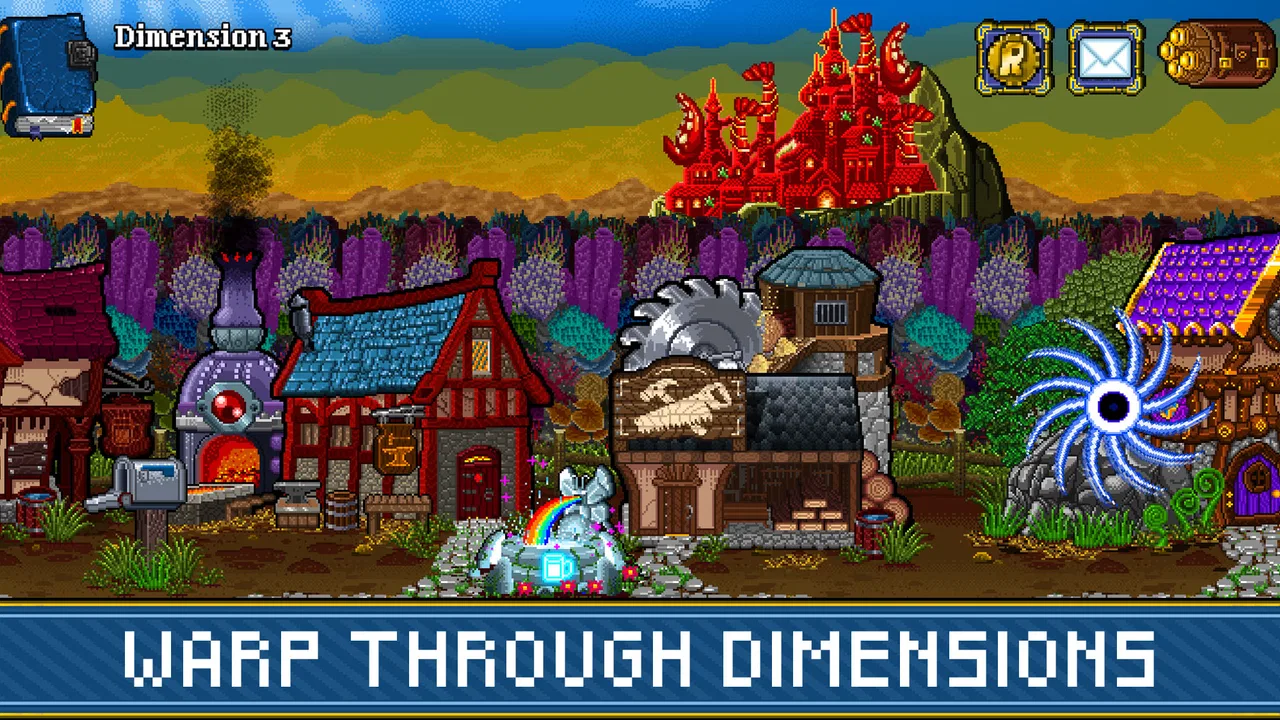
Soda Dungeon 2 is a free-to-play role-playing game focused on recruiting a team of quirky soda-fueled adventurers and sending them into procedurally generated dungeons. Battles are turn-based, and you can control actions manually or rely on automated combat settings. Between expeditions, you upgrade your town, improve equipment, unlock new classes, and prepare for increasingly difficult areas. Its idle-friendly design makes it suitable for short sessions or longer progression runs.
02Is Soda Dungeon 2 free to download and play?
Yes, Soda Dungeon 2 can be downloaded and played for free on supported mobile devices. The game includes optional purchases and may use advertisements or other monetization features, depending on the platform and current version. You can make substantial progress without paying, especially if you are comfortable with its gradual progression system. However, optional purchases may provide convenience, resources, or faster advancement for players who prefer to reduce grinding.
03Does Soda Dungeon 2 require an internet connection?
Soda Dungeon 2 is designed primarily as a single-player experience, and much of its core gameplay can generally be enjoyed without a constant internet connection. You can explore dungeons, manage your party, and continue progression offline in many situations. Some features, advertisements, cloud-related functions, updates, or purchase verification may require connectivity. Availability can vary by device and version, so downloading the latest content before playing offline is recommended.
04Are there in-app purchases or advertisements in Soda Dungeon 2?
Soda Dungeon 2 uses optional monetization, which can include in-app purchases and advertisements. These features are typically intended to offer bonuses, convenience, or additional resources rather than making the basic game inaccessible. Still, players should expect some progression systems to encourage repeated dungeon runs and resource management. If you dislike ads or want to progress more quickly, review the available purchase options and your device’s store settings before downloading.
05Is Soda Dungeon 2 suitable for new players and younger audiences?
Soda Dungeon 2 is relatively approachable for newcomers because its turn-based combat, equipment systems, and town upgrades are introduced gradually. The humorous fantasy presentation is lighthearted, although the game involves repeated battles, character defeat, and strategic resource management. Parents should check the current age rating, advertising content, and in-app purchase settings for their region. Players who prefer fast action may find the automated, progression-focused gameplay slower than traditional RPGs.
Pros
- Deep crafting and upgrade systems add plenty of long-term goals.
- Offline progress lets your team continue earning rewards between sessions.
- Multiple towns and dungeons provide varied environments to explore.
- Auto-battle makes routine dungeon runs quick and convenient.
- Distinct soda recruits encourage experimentation with different team setups.
Cons
- Progress can feel slow without repeated grinding or resource management.
- Some later upgrades require substantial amounts of in-game currency.
- Combat becomes repetitive during extended dungeon farming sessions.
- Random loot may make obtaining specific equipment frustrating.
- The interface can feel crowded when managing many characters and items.

Soda Dungeon 2
Gallery